Recovery-to-relocation guide
Moving On: Disaster Recovery and Safer Relocation Resource Center
A guided disaster-recovery pathway for mortgage hardship, rebuilding decisions, safer relocation, property research, and scam prevention.
The short answer
When rebuilding is not the right choice, moving forward can require several decisions at once: protecting shelter, understanding the mortgage, preserving insurance and expense records, comparing relocation options, and screening the next property for hazards and fraud. Start with the stage that matches your immediate need and return here as the situation changes.
What Should I Do After a Disaster Makes My Home Unlivable?
Start with safe shelter and a usable record of your expenses, claim and housing decisions. You can begin on a phone today; you do not need to choose a replacement home or install software to take the first steps.
- Make one recovery file. Keep insurer contacts, claim numbers, lodging receipts and a dated call log together. Photograph receipts while they are readable and record why each expense was needed. Use the receipt organization guide.
- Get the current numbers in writing. Keep repair estimates, the insurer's coverage position and payment notices separate. Record which figures are quotes, which are approved and which have actually been paid.
- Contact your mortgage servicer. Ask about disaster hardship options and request the terms in writing. Do not assume damage to the home changes the loan obligation. Prepare your servicer questions.
- Compare two realistic paths. List rebuilding costs and timing beside relocation costs, housing needs and available funds. Mark estimates as estimates. Check hazards and insurance availability for any proposed replacement property before committing. Work through the rebuild-or-relocate guide.
For official next steps, see the CFPB's disaster finance and property guidance. Keep your claim moving while you plan recovery: PAi Claims helps turn the estimates and records you gather into a connected claim file. Request access assistance if cost is a barrier.

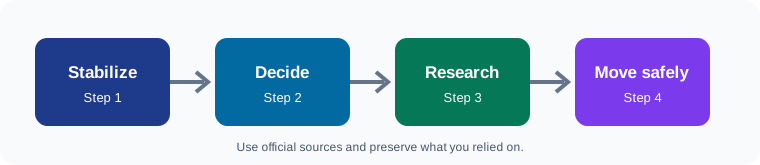
Choose your next step
Stabilize today
Secure safe lodging, medicine, transportation, mail, records, and reliable contact information before making long-term commitments.
Protect the mortgage and paperwork
Contact the verified mortgage servicer, ask about hardship options, and keep a dated log of notices, calls, payments, and documents.
Compare rebuilding with relocating
Put estimates, policy information, timelines, future hazard exposure, insurance availability, and family needs side by side.
Research the next home safely
Use listing sites as leads, then independently verify ownership, title, condition, hazards, insurance, financing, and payment instructions.
First-file checklist
- Disaster declaration and assistance numbers
- Insurance policy, claim number, adjuster contacts, and written coverage positions
- Mortgage statements and verified servicer contact information
- Temporary-housing receipts and a housing-search log
- Repair, demolition, mitigation, and relocation estimates
- Photos, inventories, notices, emails, and a dated event timeline
Print or save this list. Add dates and source information so you can tell what was known at each decision point.

Independent tools and authoritative starting points
DisasterAssistance.gov
Check federal disaster declarations and available assistance.
USA.gov housing help
Find federal and local starting points for housing assistance.
Ready.gov: Make a household plan
Review official household emergency planning guidance.
FEMA resilience analysis and planning tool
Compare community-level natural-hazard risk indicators and expected annual loss estimates.
Third-party notice: yPrivateAI is not affiliated with or endorsed by the third-party websites listed here. These links are starting points for independent research. Listings, availability, prices, property descriptions, maps, programs, and terms may change. Verify the property, representative, ownership, title, hazards, insurance availability, and payment instructions independently before making a commitment or transferring funds.
Related Moving On resources
Keep the recovery record together
Preserve notices, estimates, maps, quotes, receipts, listings, and the sources behind each important decision. For related documentation guidance, visit the property-damage documentation checklist and the policyholder resource library.