Replacement-home planning
Finding a Safer Home After a Total Loss
A practical guide to replacement-home research after a fire, flood, hurricane, or other total loss, including hazards, insurance, listings, and documentation.
The short answer
A replacement home should meet today’s housing needs without quietly recreating the conditions that caused the last loss. Search listings broadly, but compare each serious candidate using official hazard information, an address-specific insurance inquiry, independent property records, condition inspections, and a written total-cost worksheet.
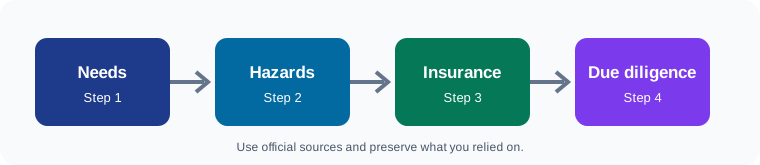
A safer property-search sequence
Define non-negotiables
Write down budget, accessibility, household size, pets, work, school, health care, transportation, and support-network needs.
Screen the location
Check flood, wind, wildfire, erosion, heat, evacuation, road, utility, and emergency-response conditions before paying for deeper due diligence.
Verify the property
Confirm the owner and listing representative, review public records, permits, taxes, liens, association obligations, and known repair history.
Price the full decision
Combine payment, taxes, insurance, deductibles, repairs, mitigation, utilities, travel, and association costs.
Preserve the record
Save dated listing copies, maps, quotes, questions, answers, inspection reports, and reasons for choosing or rejecting each property.
Candidate-property comparison
- Exact address and verified listing contact
- Current flood map and more than one hazard source
- Written insurance availability and preliminary price information
- Inspection and repair assumptions
- Title, tax, permit, zoning, and association research
- Evacuation, utility, road-access, school, medical, and accessibility notes
Print or save this list. Add dates and source information so you can tell what was known at each decision point.
Independent tools and authoritative starting points
Zillow
Browse residential listings; independently verify the listing, property, hazards, and representative.
Realtor.com
Search property listings and use the results as a starting point for independent due diligence.
Redfin
Browse homes and market information while separately checking title, condition, hazards, and insurance.
Homes.com
Search residential listings and confirm all material details through independent sources.
FEMA Flood Map Service Center
View official flood maps and related products for an address or community.
FEMA resilience analysis and planning tool
Compare community-level natural-hazard risk indicators and expected annual loss estimates.
Third-party notice: yPrivateAI is not affiliated with or endorsed by the third-party websites listed here. These links are starting points for independent research. Listings, availability, prices, property descriptions, maps, programs, and terms may change. Verify the property, representative, ownership, title, hazards, insurance availability, and payment instructions independently before making a commitment or transferring funds.
Related Moving On resources
Keep the recovery record together
Preserve notices, estimates, maps, quotes, receipts, listings, and the sources behind each important decision. For related documentation guidance, visit the property-damage documentation checklist and the policyholder resource library.