Time-sensitive homeowner research
Foreclosure Research and Scam-Warning Guide
Understand common foreclosure stages, find official records and help, preserve deadlines, and recognize foreclosure-rescue and deed scams.
The short answer
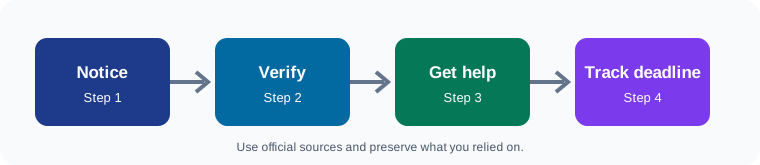
Foreclosure rules and deadlines vary by state, property, loan, and court or sale process. Do not rely on a generic internet timeline. Read every notice, verify the sender, record the stated deadline, find the official court or county source, contact the verified servicer, and seek qualified help promptly.
Build a reliable foreclosure record
Collect every notice
Keep envelopes, certified-mail information, postings, emails, account statements, court papers, and prior assistance applications.
Identify the process
Determine whether the notice references a court case, power-of-sale process, tax proceeding, association lien, sheriff sale, or another procedure.
Verify official records
Use the court clerk, county recorder, tax office, or sheriff website reached independently—not a link supplied by a stranger.
Contact verified help
Ask the servicer about available loss-mitigation review and use official counselor or legal-aid directories.
Track every deadline
Maintain a written calendar, document what was submitted, and preserve proof of delivery.
Foreclosure research file
- Loan and servicer information
- Complete payment and communication history
- All notices with envelopes and dates received
- Court, county, or sale record identifiers
- Assistance applications and proof of submission
- A deadline calendar and list of professional referrals contacted
Print or save this list. Add dates and source information so you can tell what was known at each decision point.
Independent tools and authoritative starting points
CFPB: Help for homeowners
Find current mortgage-help information and ways to contact a housing counselor.
HUD-approved housing counselors
Search for HUD-participating housing counseling agencies.
FTC: Mortgage relief scams
Recognize advance-fee and foreclosure-rescue warning signs.
Legal Services Corporation: Find legal aid
Locate civil legal-aid organizations by address.
CFPB foreclosure resources
Review federal mortgage and foreclosure information and official help pathways.
Third-party notice: yPrivateAI is not affiliated with or endorsed by the third-party websites listed here. These links are starting points for independent research. Listings, availability, prices, property descriptions, maps, programs, and terms may change. Verify the property, representative, ownership, title, hazards, insurance availability, and payment instructions independently before making a commitment or transferring funds.
Related Moving On resources
Keep the recovery record together
Preserve notices, estimates, maps, quotes, receipts, listings, and the sources behind each important decision. For related documentation guidance, visit the property-damage documentation checklist and the policyholder resource library.