How to Do a Flood Cut on Wet Drywall
Last reviewed November 7, 2026. Free public guidance from The New Faith Church and Co-op, Inc. (NFCcop), a 501(c)(3) nonprofit. This is general information, not legal or professional advice. Rules and deadlines can change, so confirm with the official sources below.
When floodwater soaks into walls, the drywall and insulation act like a sponge. A "flood cut" removes the wet lower part of the wall so the framing can dry and mold doesn't grow inside. Mold can start within 24 to 48 hours, so it's worth starting as soon as it's safe.
Before you start
- Turn off the power to the area at the breaker, but only if you can reach it without standing in water. See electrical safety after a flood.
- Document everything first. Take photos and video of every wall with a tape measure showing the water line. Keep a small sample of the drywall, insulation, and carpet for your adjuster. See how to document damage.
- Call your insurer to report the claim. Most policies expect you to take reasonable steps to prevent more damage, and you don't need to wait for an adjuster before removing wet materials. Keep receipts for supplies and labor.
- Older homes: drywall joint compound in homes built before about 1980 may contain asbestos, and paint in homes built before 1978 may contain lead. If your home is older, have the materials tested before cutting or sanding.
Safety gear
Wear an N95 respirator, safety glasses or goggles, work gloves, long sleeves, and boots. If the water was sewage or floodwater, treat everything as contaminated. See sewage backup cleanup.
How high to cut
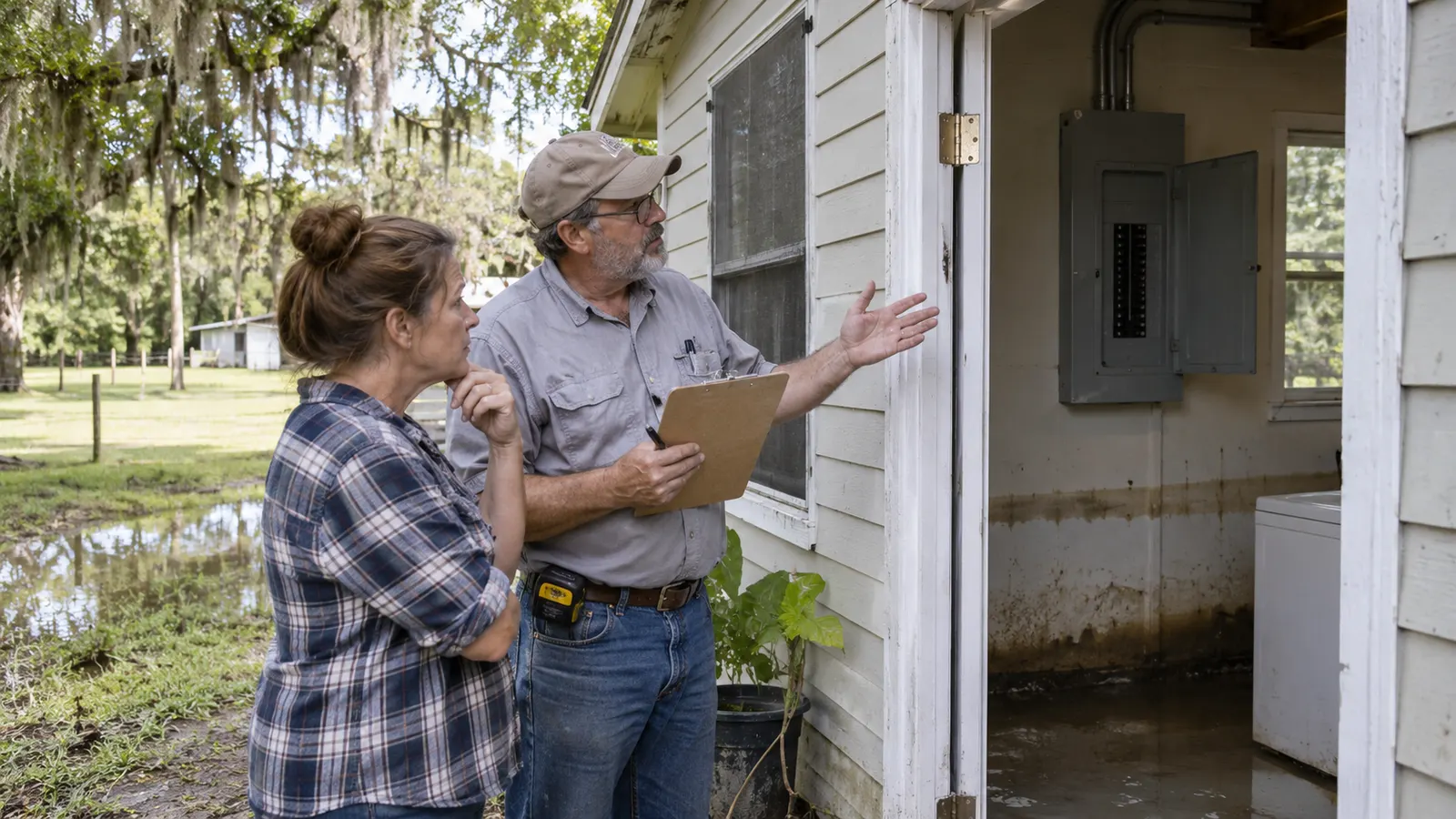
Find the highest water line in the room. Cut at least 12 inches above it, because water wicks up inside drywall. Many contractors cut at 2 feet or 4 feet so the patch lines up with standard drywall sheets. If water reached higher than 4 feet, you'll likely remove the full wall.
Step by step
- Take off baseboards and trim. Number them if you plan to reuse them.
- Snap a straight chalk line around the room at your cut height.
- Cut along the line with a utility knife, an oscillating tool, or a drywall saw. If you use a circular saw, set the blade depth to the drywall thickness (usually 1/2 inch) so you don't hit wires or pipes. Watch for outlets and plumbing.
- Pull the drywall off below the cut and bag it.
- Remove all wet insulation. Wet fiberglass and cellulose don't dry properly and need to be replaced.
- Pull nails and screws from the studs.
- Clean studs and bottom plates with detergent and water. Remove mud and debris.
Dry before you rebuild
- Run fans and dehumidifiers, and open windows when the outside air is drier than inside.
- Use a moisture meter. Don't close up walls until readings on the framing match dry areas of the house. This can take days to weeks.
- If you see mold on studs, clean it and dry the area completely. See mold after a flood.

Paying for it
Rising floodwater is usually covered by flood insurance, not homeowners insurance. See flood insurance basics and flood cleanup. After a declared disaster, FEMA may help; if you get an insufficient damage letter, see how to appeal. If you hire help, read how to hire a contractor after a storm.
Frequently asked questions
How high should I cut drywall after a flood?
At least 12 inches above the highest water line. Many contractors cut at 2 or 4 feet to line up with standard drywall sheets.
Do I need to remove insulation after a flood?
Yes. Wet fiberglass or cellulose insulation doesn't dry properly and should be removed and replaced.
Should I wait for the insurance adjuster before cutting drywall?
Usually not. Photograph everything, keep samples, report the claim, and start removing wet materials to prevent mold. Keep all receipts.
Need help with your claim or paperwork?
NFCcop offers free guidance to storm survivors. Ask for free help or browse all disaster recovery resources.