Flood and Water Damage Cleanup: The First 48 Hours
Last reviewed November 5, 2026. Free public guidance from The New Faith Church and Co-op, Inc. (NFCcop), a 501(c)(3) nonprofit. This is general information, not legal or professional advice. Rules and deadlines can change, so confirm with the official sources below.
What you do in the first two days after a flood decides how much of your home can be saved and how strong your insurance claim will be. Mold can start growing on wet materials in as little as 24 to 48 hours, so speed matters. Safety and photos come first.
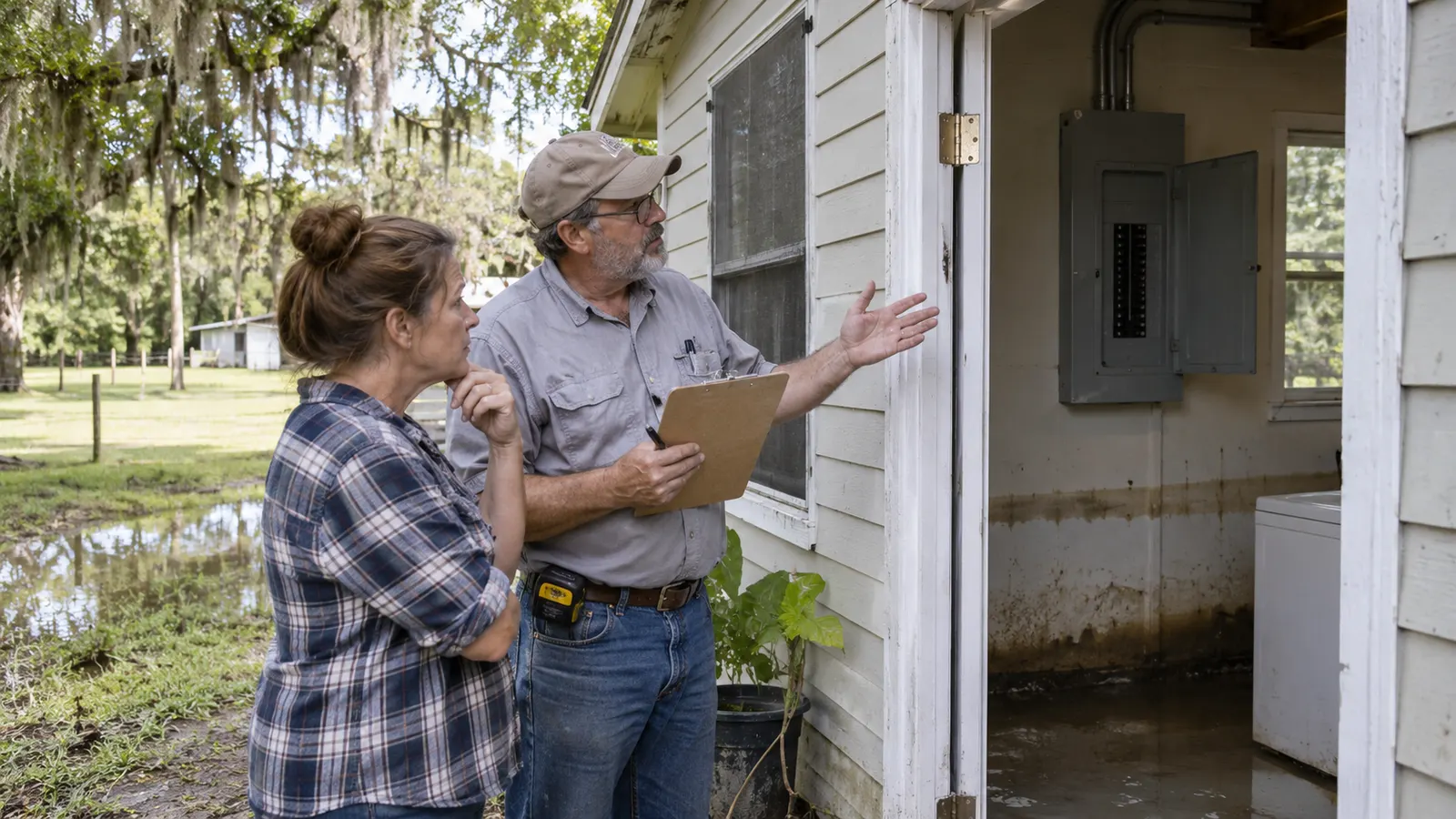
1. Make sure it is safe to go in
- Stay out if you see sagging ceilings, cracked foundations, or shifted walls, or if you smell gas. Leave and call the gas company from outside.
- Do not walk through standing water if the power may be on. Shut off power at the main breaker only if you can reach it while standing somewhere dry. Otherwise call your utility or an electrician.
- Treat floodwater as contaminated with sewage and chemicals.
- Wear an N95 mask, waterproof gloves, goggles, and rubber boots.
2. Photograph everything before you clean
Take wide photos of each room, close-ups of damage, and a photo of the water line on walls. Photograph items before you throw them out, and keep a small sample of carpet and other materials for the adjuster. Then call your insurance company and start a claim. Our damage documentation guide has a room-by-room checklist.
Know your coverage: most homeowners policies do not cover flooding from rising water. Flood damage is usually covered only by a separate flood policy, such as one through the National Flood Insurance Program. Water from a burst pipe or roof leak is handled differently, so tell your insurer exactly where the water came from.

3. Get the water out
- Use a wet/dry vacuum or a pump for standing water.
- Basements: if the ground outside is still soaked, pump out the water gradually, about a third per day. Pumping too fast can let outside water pressure crack or collapse basement walls.
- Never run a gas pump or generator inside the house or garage. See generator safety.
4. Decide what to keep and what to throw away
Usually throw away if soaked by floodwater
- Carpet padding, mattresses, pillows, upholstered furniture, and stuffed toys
- Wet drywall and insulation. Many contractors cut drywall about a foot above the water line, which is called a "flood cut," so the wall can dry out.
- Food, medicine, and cosmetics that floodwater touched
- Particleboard furniture that has swollen
Usually can be cleaned
- Hard, non-porous items such as metal, glass, hard plastic, sealed tile, and solid wood furniture
- Clothing and fabrics that can be washed in hot water
5. Clean, then disinfect
Scrub hard surfaces with detergent and clean water first. Disinfect only after cleaning. If you use bleach, mix no more than 1 cup of household bleach per 1 gallon of water, and keep windows open. Never mix bleach with ammonia or other cleaners, because the fumes can be deadly.
6. Dry the house completely
- Open doors and windows when the outside air is drier than inside. Run fans and dehumidifiers.
- Do not run your heating and air system if floodwater reached it. Have a professional inspect and clean it first.
- Do not paint, seal, or close up walls until the framing is dry. EPA guidance is a moisture reading of 15% or less before refinishing, and full drying often takes days to weeks.
If you see mold, read mold after a flood before you start scrubbing.
Who should not do flood cleanup
Children, pregnant people, and anyone with asthma, lung disease, or a weakened immune system should stay out of flooded and moldy areas. Older homes may have asbestos or lead paint, so check before you tear out materials.
Frequently asked questions
How long do I have to dry out my house after a flood?
Aim to remove water and start drying within 24 to 48 hours. Mold can begin growing on wet materials in that window.
Does homeowners insurance cover flood damage?
Usually not for rising floodwater. Flood damage is typically covered only by a separate flood insurance policy. Water from a burst pipe or roof leak may be covered under homeowners insurance.
Should I throw away wet drywall?
Drywall and insulation soaked by floodwater are usually removed. Contractors often cut about a foot above the water line so the wall cavity can dry.
How much bleach should I use to disinfect after a flood?
No more than 1 cup of household bleach per gallon of water, used only after cleaning with detergent. Never mix bleach with ammonia or other cleaners.
Need help with your claim or paperwork?
NFCcop offers free guidance to storm survivors. Ask for free help or browse all disaster recovery resources.