Active Roof Leak First Steps: Stop Water and Protect Your Home
Last reviewed November 6, 2026. Free public guidance from The New Faith Church and Co-op, Inc. (NFCcop), a 501(c)(3) nonprofit. This is general information, not legal, medical, or professional advice. Rules can change, so confirm with the official sources below.
When rainwater starts dripping through your ceiling during a storm, acting quickly can save your furniture, flooring, and structural framing from severe ruin. Your immediate priority is containing the water inside the room, relieving pressure on the ceiling drywall, and moving valuables away from the drip. Follow these essential safety steps before attempting any outdoor repairs.
Immediate Actions to Take Inside the House
Do not panic when water begins to drip. Take these direct indoor measures immediately to control the flow:
- Catch the water: Place a sturdy bucket, plastic trash can, or storage tub directly beneath the drip. Place an old towel or washcloth inside the bottom of the bucket to silence the splashing and stop water from bouncing onto nearby floorboards.
- Move valuables: Clear away rugs, electronics, lamps, and furniture. If heavy furniture cannot be moved, cover it with heavy plastic trash bags or a painter's drop cloth.
- Check electrical fixtures: If water is leaking near a ceiling fan, light fixture, or wall outlet, turn off power to that room at the breaker panel, but only if you can reach the panel without standing in water. If you are experiencing a broader power outage, keep flashlights nearby and avoid walking through pooled water.

How to Relieve Ceiling Water Pressure
Water that penetrates roof decking frequently pools on top of drywall or plaster ceilings. As water collects, it creates a heavy, saggy blister or bubble in the paint:
Puncturing the blister gives the trapped water a direct, controlled path straight into your bucket. Without this puncture, the soaked drywall can suddenly tear free under the water's weight, crashing onto your floor and causing far worse destruction.
Documenting the Damage for Your Insurance Claim
Before you wipe up puddles or clear away damaged drywall, you must create visual proof for your insurance adjuster. Taking clear photos and video is the backbone of your claim.
- Photograph the wet ceiling, the bubbling paint, and the puncture hole.
- Capture wide-angle shots showing how water affected the entire room, including carpets and furniture.
- Take close-up photos of serial numbers on ruined electronic equipment or soaked furniture labels.
For more detailed advice on preserving your records, read our full guide on how to document damage for adjusters.
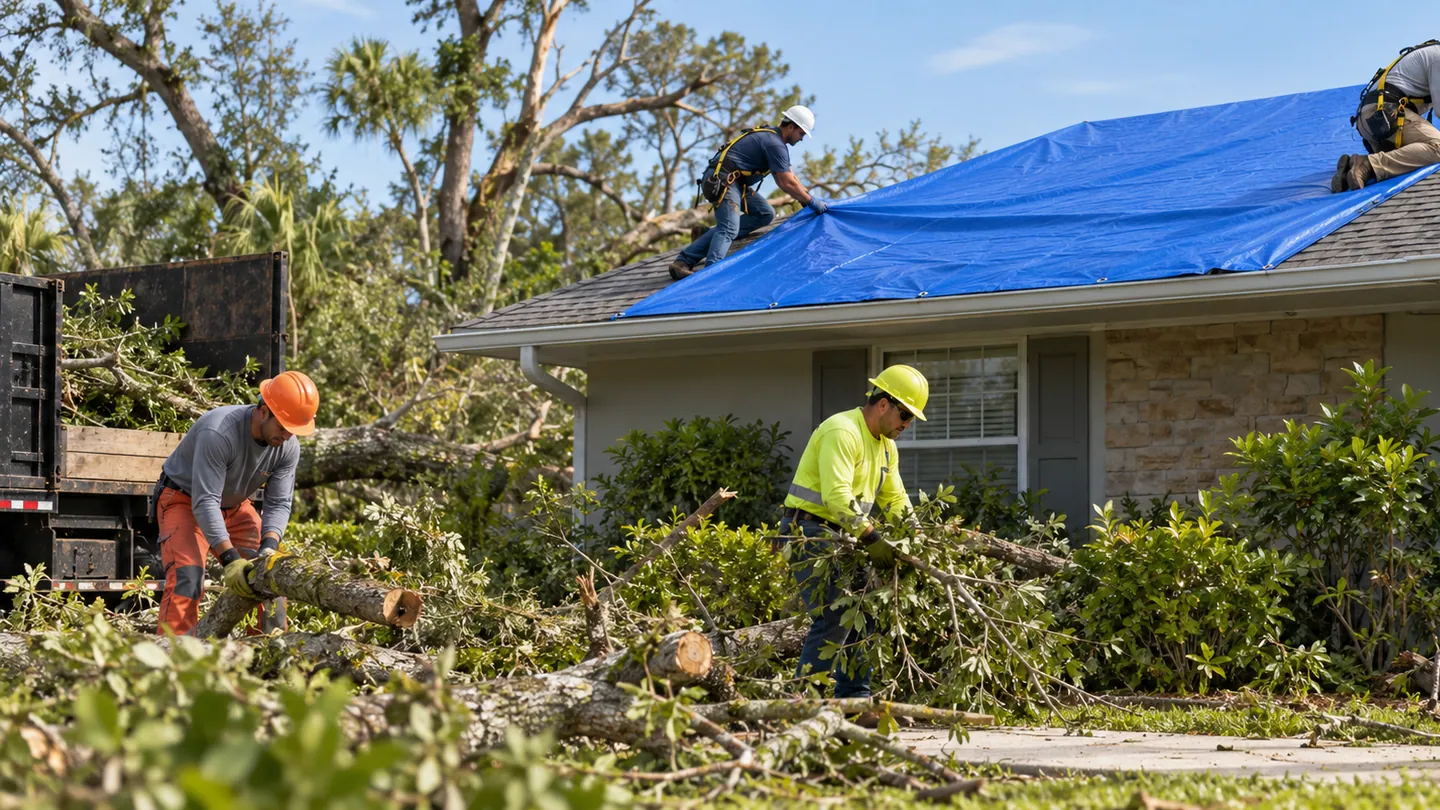
Outdoor Steps: What to Do Once the Storm Passes
Never climb onto your roof during an active rainstorm or while strong wind gusts are blowing. Wet roofs are dangerously slick, and lightning poses an extreme hazard. Wait until the storm clears:
- Inspect from the ground: Walk around your yard with binoculars to look for torn flashing, missing asphalt shingles, or tree branches resting on the ridge.
- Install an emergency tarp: If you can do so safely, install a plastic tarp covering the ridge and extending past the leak location, securing it with wooden 2x4 strips. If you are unable to climb safely, hire an emergency repair crew.
- Hire legitimate help: Beware of out-of-town scammers who offer fast roof fixes for cash. Review our safety checklist on how to hire a contractor after a storm before signing contracts.
Drying Out to Prevent Toxic Mold
Mold spores begin to germinate on wet ceiling insulation, drywall paper, and carpeting within 24 to 48 hours. As soon as standing water is caught, start drying the room:
- Open interior doors and windows if outside humidity is low.
- Run air conditioning units, standard household fans, and dehumidifiers continuously.
- Pull back wet carpet pads; soaked foam pads usually cannot be sanitized and must be cut out and discarded.
Frequently asked questions
Should I climb onto my roof during a rainstorm to fix a leak?
No. Never climb onto a wet, slippery roof during an active rainstorm or wind event. Wait until the storm passes and daylight arrives, or hire an emergency roofing professional.
Why should I poke a hole in a bulging ceiling blister?
Puncturing the center of a drywall water blister gives trapped water a single controlled path into a bucket. This relieves heavy weight and prevents the entire ceiling plaster from collapsing.
Does insurance pay for roof leaks caused by normal wear and tear?
Homeowners insurance covers sudden and accidental damage, like wind, hail, or a fallen tree limb. Insurers typically do not cover leaks resulting from an old roof that was poorly maintained.
How quickly can mold start growing after water enters the house?
Mold can begin colonizing wet drywall, insulation, and wood framing within 24 to 48 hours. Drying out the area quickly with fans and airflow is essential.
Official sources
Need help with your claim or paperwork?
NFCcop offers free guidance to storm survivors. Ask for free help or browse all disaster recovery resources.