Emergency Preparedness for Older Adults
Last reviewed November 9, 2026. Free public guidance from The New Faith Church and Co-op, Inc. (NFCcop), a 501(c)(3) nonprofit. This is general information, not legal or professional advice. Rules and deadlines can change, so confirm with the official sources below.
Older adults face higher risks in disasters, especially during long power outages in extreme heat or cold. A little planning, and a few people who will check in, can make a big difference. These steps work for older adults themselves and for the family members who care for them.
Medicines and medical needs
- Keep a written list of all medicines, doses, doctors, and pharmacies in your wallet and go bag.
- Ask your doctor and pharmacist about keeping an extra supply on hand for emergencies.
- Keep spare glasses, hearing aid batteries, and denture supplies in your go bag.
- If you use oxygen, a CPAP, or other powered equipment, plan for backup power. See medical equipment during an outage.

Heat and cold are serious dangers
Older bodies don't regulate temperature as well, and some medicines make heat harder to handle. If the power goes out:
- In heat, move early to a cooling center or a relative's home with power. See heat stroke signs.
- In cold, layer up and move to a warm place early. See staying warm without power and hypothermia signs.
- Never heat with an oven, grill, or generator indoors. See carbon monoxide safety.
Set up a check-in plan
Agree with family, neighbors, or your faith community on who will check on you before and after a storm, and how. If you live alone, give a trusted person a key. See our family reunification plan.
Evacuation
- If you don't drive or need help, register with your county's special needs or transportation registry ahead of time. See evacuating without a car.
- Leave early. Long waits and traffic are harder on older adults.
- If you live in assisted living or a nursing home, ask for a copy of its emergency plan.
For caregivers
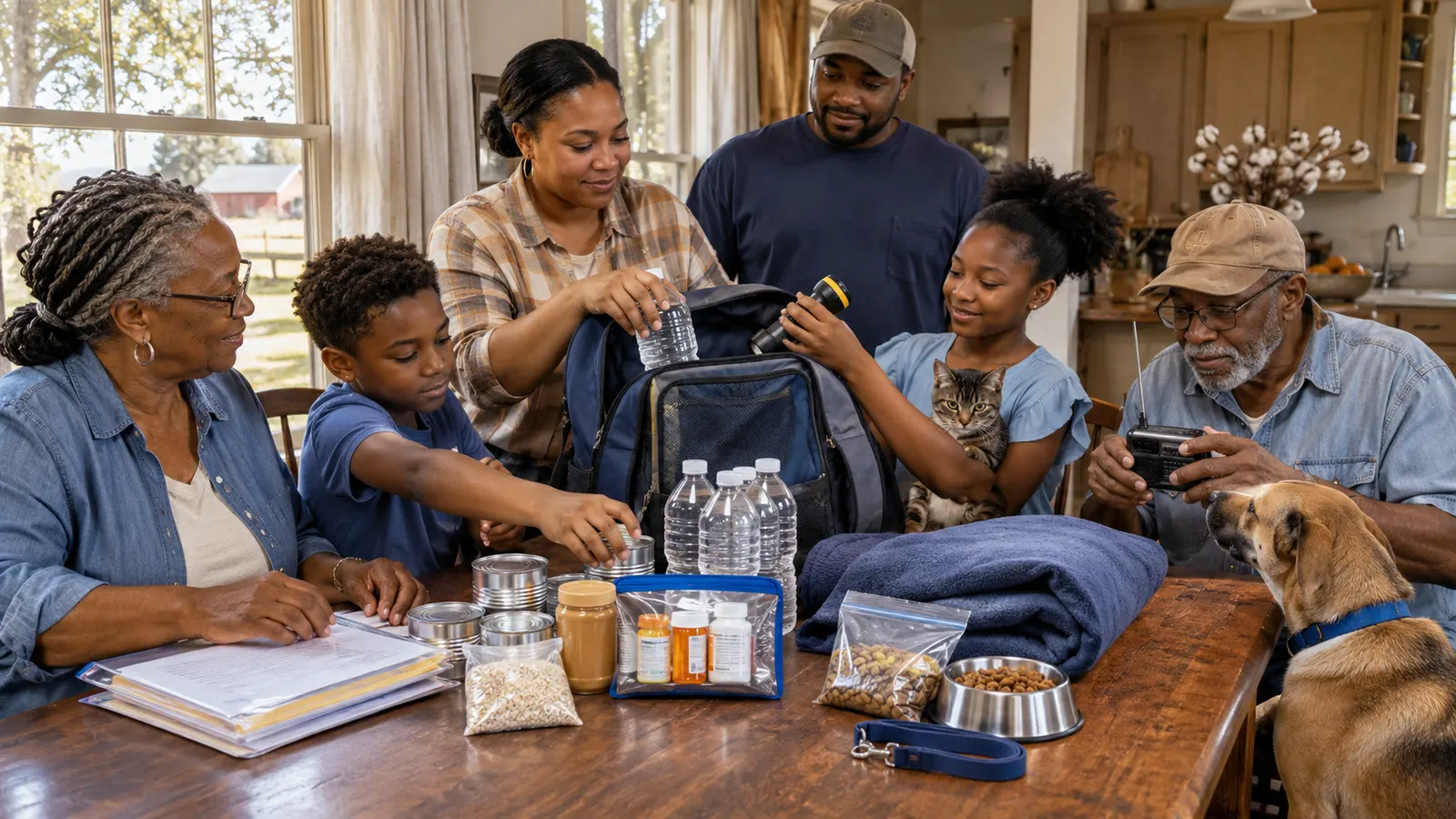
Keep copies of key documents, such as IDs, Medicare and insurance cards, power of attorney, and advance directives, in a waterproof bag and stored securely online. Watch for scams that target older adults after disasters. See disaster scams.
Frequently asked questions
Why are older adults at higher risk in disasters?
Health conditions, medicines, mobility limits, and reduced ability to handle heat and cold make outages and evacuations more dangerous.
What should an older adult keep in a go bag?
A medicine list and supply, spare glasses, hearing aid batteries, copies of IDs and insurance cards, a phone charger, and comfortable clothes.
How can I help an older relative prepare?
Make a check-in plan, help them register with the county if they need evacuation help, and keep copies of their key documents.
Need help with your claim or paperwork?
NFCcop offers free guidance to storm survivors. Ask for free help or browse all disaster recovery resources.