Car Flood Damage: What to Do and How Insurance Handles It
Last reviewed November 6, 2026. Free public guidance from The New Faith Church and Co-op, Inc. (NFCcop), a 501(c)(3) nonprofit. This is general information, not legal, medical, or professional advice. Rules can change, so confirm with the official sources below.
If your car, truck, or SUV was submerged in standing floodwaters, the single most important rule is: do not try to turn on the ignition. Turning the key or pushing the starter button pulls water directly into the engine and destroys the electronics. Understanding how comprehensive auto coverage works will help you protect your claim and get back on the road faster.
Rule #1: Do Not Turn On the Ignition
The natural reaction after floodwaters recede is to test whether the vehicle still starts. Resist this urge completely.
If water has entered the engine cylinders through the air intake or exhaust pipe, turning the starter creates an immediate condition called "hydrolock." Because water cannot be compressed like air, piston rods bend and the entire engine block can crack within seconds. Furthermore, turning on the battery sends electrical current through wet computer control modules, frying circuitry that might otherwise have been cleaned and salvaged.
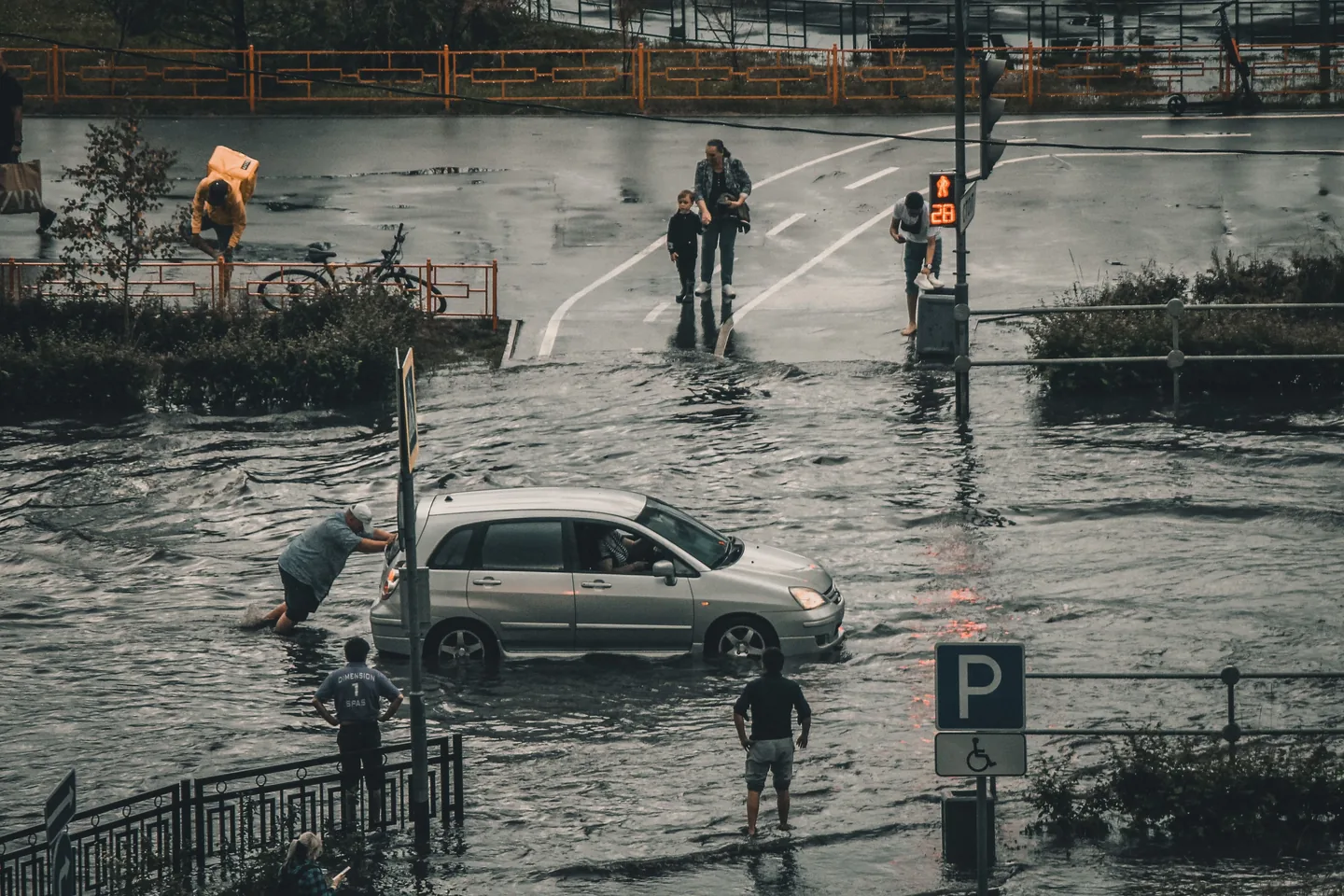
Immediate Steps to Take With a Flooded Car
Once floodwaters drop and it is safe to walk outside, complete these basic inspection steps:
- Find the high-water line: Look for silt, mud, and water stains along the car doors, windows, and headlights. Take clear photos of this waterline against the body panels.
- Check inside the cabin: Open the door and check if water soaked the carpet, seats, or dashboard. Sniff for mildew and inspect door panels.
- Disconnect the car battery: If you can safely reach under the hood, disconnect the negative battery terminal to prevent electrical shorts.
- Inspect fluids: Check the engine oil dipstick and transmission fluid. If the oil looks like a pale brown milkshake, water has contaminated the crankcase.
- Dry out the cabin: Roll down windows if conditions are dry, remove floor mats, and use towels or wet vacs to extract pooled water. For home guidelines on moisture, see our advice on flood cleanup.
Which Insurance Policy Covers Car Flood Damage?
Many vehicle owners are confused about which insurance applies when a car floods in their own driveway:
- Homeowners and flood policies: Neither your standard homeowners insurance nor your National Flood Insurance Program (NFIP) policy covers motor vehicles.
- Auto comprehensive coverage: Flooding is covered strictly under the Comprehensive (other-than-collision) portion of your personal auto insurance policy.
- Liability-only policies: If you carry only state-minimum liability insurance without comprehensive coverage, your insurance company will not pay for flood damage.

How Insurance Adjusters Evaluate Flood Losses
Modern vehicles contain dozens of electronic sensors, airbag computers, and complex wiring harnesses located under seats and along floorboards. Because silt and corrosion continue to rot electrical connectors months after drying out, insurance adjusters often consider flood-damaged cars an extreme safety risk.
If water rose above the lower seat cushions or touched the lower dashboard, insurers will commonly declare the vehicle a total loss. If declared a total loss, the insurer pays the actual cash value of the vehicle immediately prior to the storm, minus your comprehensive deductible. If your car title or paperwork was destroyed in the storm, learn how to replace lost documents so you can transfer title smoothly.
What If You Do Not Have Comprehensive Coverage?
If you lack comprehensive coverage on your auto policy and your county is included in a federal disaster declaration, you may qualify for help through FEMA’s Other Needs Assistance (Transportation Assistance). Review our FEMA application guide for instructions on submitting disaster paperwork.
Frequently asked questions
Why shouldn't I try starting my car after a flood?
Starting a flooded engine can cause hydrostatic lock, which permanently destroys internal pistons, valves, and electrical systems. Leave the ignition off until a certified mechanic inspects it.
Does homeowners insurance or flood insurance cover my car?
No. Homeowners insurance and National Flood Insurance Program policies do not cover vehicles. Flood damage to a car is covered exclusively under the comprehensive section of your auto insurance policy.
Will an insurance company declare a flooded car a total loss?
In many cases, yes. If water reaches the bottom of the dashboard or seats, sensitive wiring harnesses and computer modules are ruined, usually prompting insurers to declare the vehicle a total loss.
Can FEMA help me pay for a flooded vehicle?
FEMA Other Needs Assistance may provide limited help for vehicle repair or replacement if you do not carry comprehensive insurance, the county is declared, and you lack other transportation.
Official sources
Need help with your claim or paperwork?
NFCcop offers free guidance to storm survivors. Ask for free help or browse all disaster recovery resources.