Wildfire Evacuation Checklist
Last reviewed November 7, 2026. Free public guidance from The New Faith Church and Co-op, Inc. (NFCcop), a 501(c)(3) nonprofit. This is general information, not legal or professional advice. Rules and deadlines can change, so confirm with the official sources below.
Wildfires move fast, and roads can close in minutes. The safest choice is almost always to leave early, before you're ordered to. This checklist helps you get ready now so you can go quickly when it counts.
Know the alert levels
- Ready: fire season or a fire in your region. Make your plan and pack your bag.
- Set (evacuation warning): danger is possible. Load your car and be ready to leave. People who need extra time, including older adults, people with disabilities, and families with pets or livestock, should go now.
- Go (evacuation order): leave immediately. Follow the routes officials give you.
Sign up for your county's emergency alerts, and turn on emergency alerts on your phone.
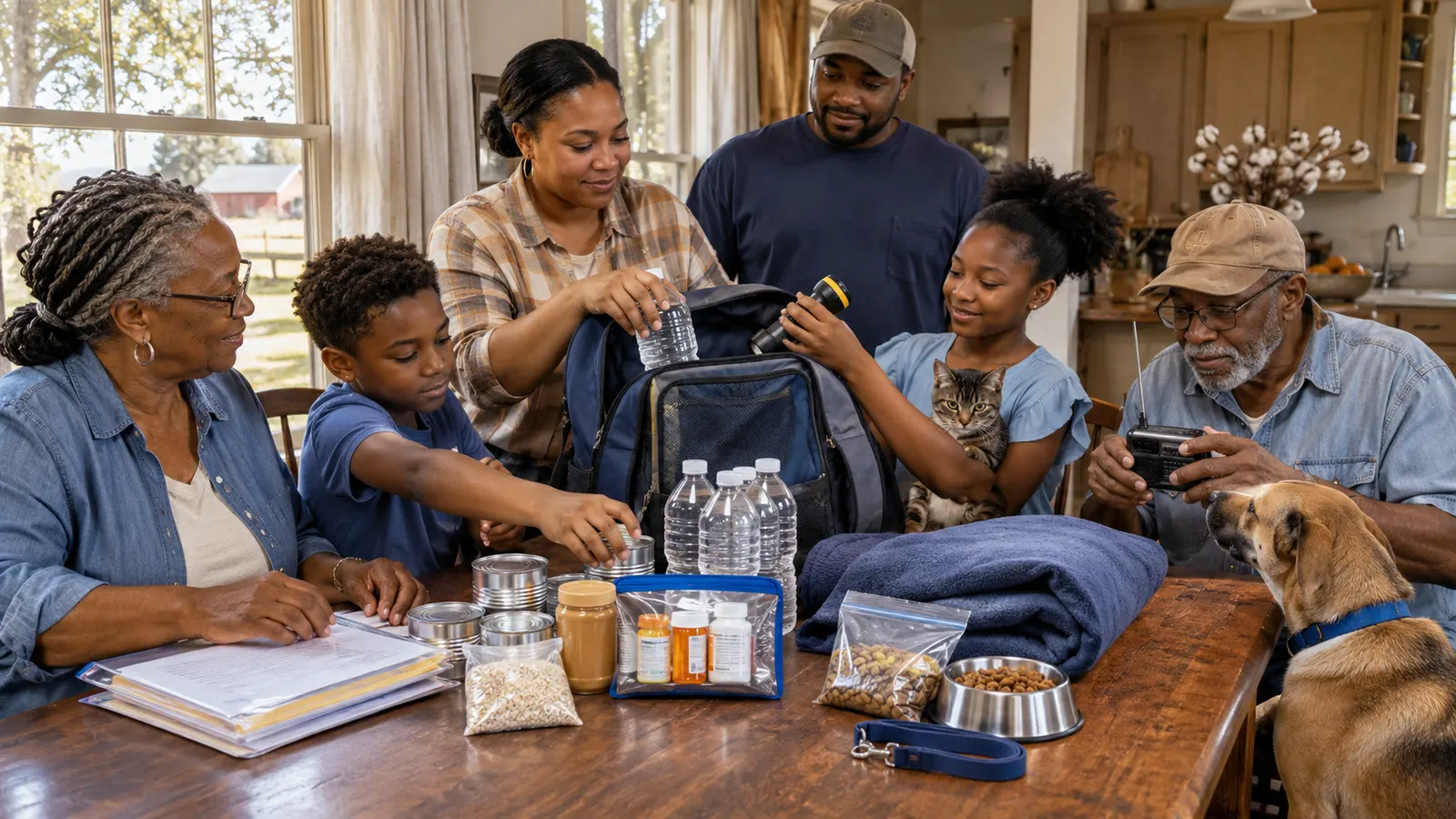
Grab the "5 Ps"
- People and pets
- Prescriptions, eyeglasses, hearing aids, and medical equipment
- Papers: IDs, insurance policies, deeds, and other important documents (or digital copies)
- Personal needs: clothes, phone chargers, cash, and water
- Priceless items: photos, keepsakes, and computer hard drives
Keep a go bag packed all season. See our emergency go bag checklist and pets in disasters.
If you have a few minutes before leaving
- Close all windows, doors, and vents, but leave doors unlocked for firefighters.
- Move furniture away from windows, and take down flammable curtains.
- Shut off gas at the meter if officials tell you to. Turn off propane tanks.
- Leave porch and outside lights on so firefighters can see the house in smoke.
- Move patio furniture, doormats, and firewood away from the house.
- Back your car into the driveway, loaded, with the windows up and keys handy.
If you're trapped
Call 911 and tell them where you are. Stay inside a building, away from outside walls and windows, with doors and windows closed. In a car, park away from heavy brush, roll up the windows, turn on the headlights, and lie on the floor under a wool blanket or coat. Don't run on foot unless there's no other choice.

After the fire
Return only when officials say it's safe. Watch for hot spots, ash pits, and damaged power lines. Wear an N95 mask and gloves around ash. Keep receipts for hotels, food, and travel; many homeowners policies pay additional living expenses during a mandatory evacuation. See wildfire smoke safety.
Frequently asked questions
What should I take if I have to evacuate for a wildfire?
Remember the 5 Ps: people and pets, prescriptions, papers, personal needs, and priceless items. Keep a go bag packed during fire season.
Should I lock my doors when I evacuate for a wildfire?
Fire officials generally advise closing all doors and windows but leaving doors unlocked so firefighters can get in.
Does insurance pay for wildfire evacuation costs?
Many homeowners and renters policies pay additional living expenses during a mandatory evacuation. Keep every receipt and check your policy.
Need help with your claim or paperwork?
NFCcop offers free guidance to storm survivors. Ask for free help or browse all disaster recovery resources.