Well Water After a Flood: Safety Steps
Last reviewed November 7, 2026. Free public guidance from The New Faith Church and Co-op, Inc. (NFCcop), a 501(c)(3) nonprofit. This is general information, not legal or professional advice. Rules and deadlines can change, so confirm with the official sources below.
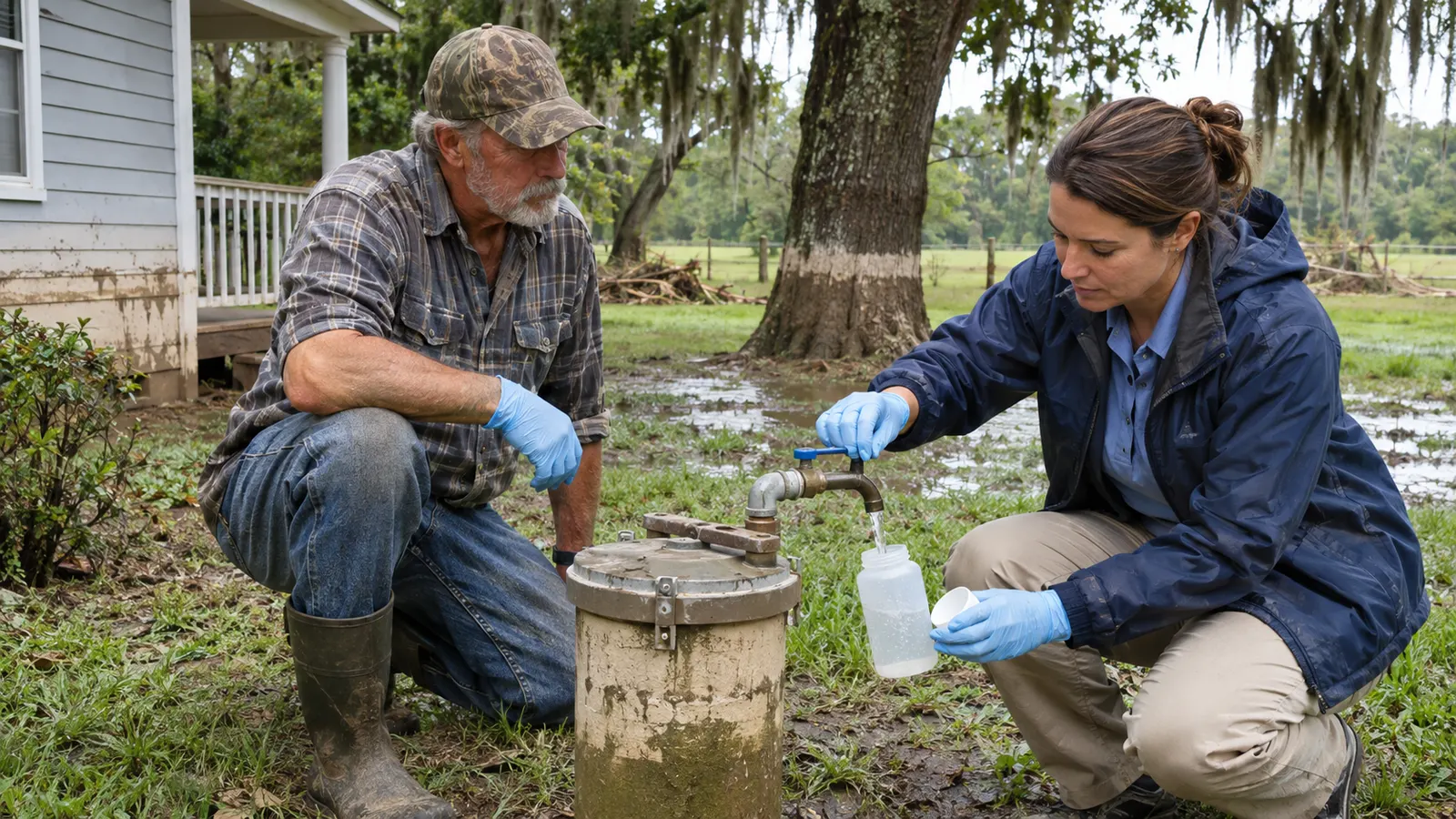
If floodwater covered or got near your private well, assume the water is contaminated until it's tested. Floodwater can carry sewage, bacteria, chemicals, and fuel into the well. Unlike city water, no one tests a private well for you.
Don't drink it yet
Until your well has been disinfected and tested, don't use the water for drinking, cooking, brushing teeth, making baby formula, washing dishes, or making ice. Use bottled water, or water you've boiled at a rolling boil for 1 minute. Boiling kills germs but doesn't remove chemicals or fuel. See boil water notice basics.
Signs your well may be contaminated
- Floodwater covered the wellhead or got into the well casing
- Water looks cloudy, smells like fuel or sewage, or tastes different
- The well is in a low spot, is shallow, or is old
- A nearby septic system flooded. See septic systems after a flood.
Safety first
Stay away from the well pump while floodwater is around it, because you could be shocked. After the water goes down, have an electrician or well contractor check the pump and wiring before you turn it back on. Don't pump a flooded well dry quickly; it can damage the well or pump.
Disinfect the well
Once floodwater has gone down, the well usually needs to be "shock chlorinated" with bleach and then flushed. The right amount of chlorine depends on the depth and size of your well, so follow your county or state health department's instructions or hire a licensed well contractor. Wear gloves and eye protection, and never mix bleach with other cleaners.
Test before drinking
After disinfecting and flushing, have the water tested for bacteria (total coliform and E. coli). Your local health department can tell you where to get a test kit; some offer free or low-cost testing after disasters. If fuel or chemicals got into the well, ask about additional tests. Keep using safe water until results come back clean.

Get help
Call your local health department or 211 for testing and bottled water sites. After a declared disaster, FEMA may help with repairs to a private well. See the FEMA application guide.
Frequently asked questions
Is my well water safe after a flood?
Assume it isn't if floodwater got near the well. Use bottled or boiled water until the well has been disinfected and a test shows no bacteria.
How do I disinfect a well after a flood?
Shock chlorinate it with bleach and flush it, following your health department's instructions or using a licensed well contractor. Then test before drinking.
Does FEMA help fix private wells?
After a declared disaster, FEMA may help with repairs to a private well needed for safe drinking water. Apply and list the damage.
Need help with your claim or paperwork?
NFCcop offers free guidance to storm survivors. Ask for free help or browse all disaster recovery resources.