Frozen Pipes: Prevent, Thaw, and Handle a Burst Pipe
Last reviewed November 6, 2026. Free public guidance from The New Faith Church and Co-op, Inc. (NFCcop), a 501(c)(3) nonprofit. This is general information, not legal or professional advice. Rules and deadlines can change, so confirm with the official sources below.
Pipes in outside walls, crawl spaces, attics, and garages are the first to freeze in a hard cold snap. A frozen pipe can split and pour gallons of water into your home once it thaws. A few steps before the freeze prevent most of it, and fast action limits the damage if a pipe does burst.
Before the freeze: prevent frozen pipes
- Let faucets drip. On the coldest nights, let a slow drip run from faucets on outside walls. Moving water is harder to freeze.
- Open cabinet doors under kitchen and bathroom sinks so warm room air reaches the pipes.
- Keep the heat steady. Keep the thermostat at the same temperature day and night. If you leave home, don't set it lower than about 55°F.
- Disconnect garden hoses and shut off and drain outdoor faucets if you can.
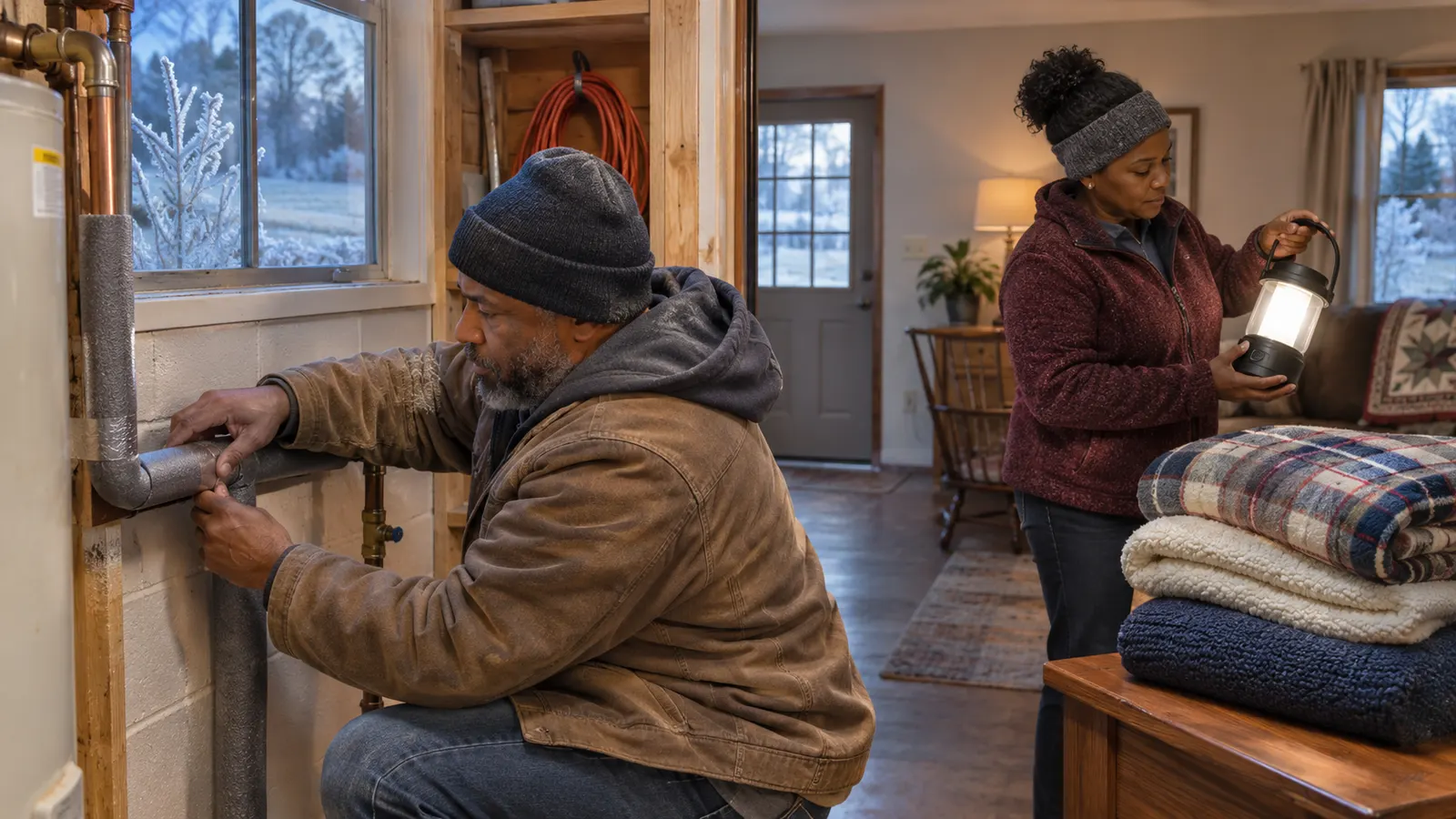
- Insulate exposed pipes in crawl spaces, attics, and garages with foam pipe sleeves from a hardware store.
- Know where your main water shutoff valve is before you need it. Everyone in the house should know.
Signs a pipe is frozen
You turn on a faucet and get only a trickle or nothing at all. You may also see frost on an exposed pipe or a bulge in it. Treat it as frozen and act before it thaws on its own and splits.
How to thaw a frozen pipe safely
- Open the faucet the pipe feeds. As ice melts, running water helps melt the rest and relieves pressure.
- Apply gentle heat to the frozen section with a hair dryer, a heating pad, or towels soaked in hot water. Start near the faucet and work back toward the frozen spot.
- Never use an open flame. No torches, propane heaters, or charcoal. They can start a fire, and fuel-burning heat indoors can cause carbon monoxide poisoning.
- Keep heating until full water pressure returns, then check other faucets. One frozen pipe often means others are frozen too.
- Call a licensed plumber if you can't find or reach the frozen section, or if the pipe has cracked.
If a pipe bursts
- Shut off the main water valve right away.
- Turn off electricity to wet areas at the breaker panel, but only if you can reach the panel without standing in water.
- Photograph everything before you clean: the broken pipe, the water, and damaged belongings. See our damage documentation guide.
- Remove water and start drying within 24 to 48 hours to prevent mold. See water damage cleanup.
- Call your insurance company and save receipts for plumbers, fans, and dehumidifiers.

Does insurance cover a burst pipe?
Most homeowners policies cover sudden and accidental water damage from a burst pipe, such as soaked floors, walls, and belongings. Many policies do not cover freeze damage if the home was left without heat and the water wasn't shut off and drained. Damage from a slow, long-term leak is also often excluded. Report the loss quickly and show you acted fast to stop the water. Our guide on temporary repairs insurance usually pays for explains how to protect your claim.
Frequently asked questions
At what temperature do pipes freeze?
Pipes in unheated or exposed areas are at risk once outdoor temperatures drop well below freezing, especially overnight and during long cold snaps. Pipes on outside walls and in crawl spaces freeze first.
Should I let my faucets drip?
Yes, on very cold nights. A slow drip from faucets on outside walls keeps water moving and makes freezing less likely.
Can I use a heat gun or torch to thaw a pipe?
Do not use a torch or any open flame. Use a hair dryer, heating pad, or hot towels, and keep the faucet open while you thaw.
Does homeowners insurance cover a burst pipe?
Usually for sudden water damage, but often not if the home was left unheated without shutting off and draining the water. Check your policy and report the loss right away.
Need help with your claim or paperwork?
NFCcop offers free guidance to storm survivors. Ask for free help or browse all disaster recovery resources.