Chainsaw Safety for Storm Cleanup
Last reviewed November 7, 2026. Free public guidance from The New Faith Church and Co-op, Inc. (NFCcop), a 501(c)(3) nonprofit. This is general information, not legal or professional advice. Rules and deadlines can change, so confirm with the official sources below.
Chainsaw injuries spike after hurricanes and ice storms. Storm-damaged trees are much more dangerous to cut than a normal log, because trunks and limbs are often bent, twisted, and under heavy tension. Knowing when not to cut is the most important skill.
Leave these to professionals
- Any tree or limb touching or near a power line. Stay at least 10 feet away and call your utility. Assume the line is live.
- Trees leaning on a house, car, or another tree
- Large trees, hanging limbs ("widowmakers"), and anything that needs a ladder or climbing
- Trees that need to come down in one piece
See tree removal help and who pays when a tree falls on your house.
Wear protective gear
- Hard hat
- Safety glasses or face shield
- Hearing protection
- Heavy work gloves
- Chainsaw chaps or cut-resistant pants
- Sturdy boots, ideally steel-toed
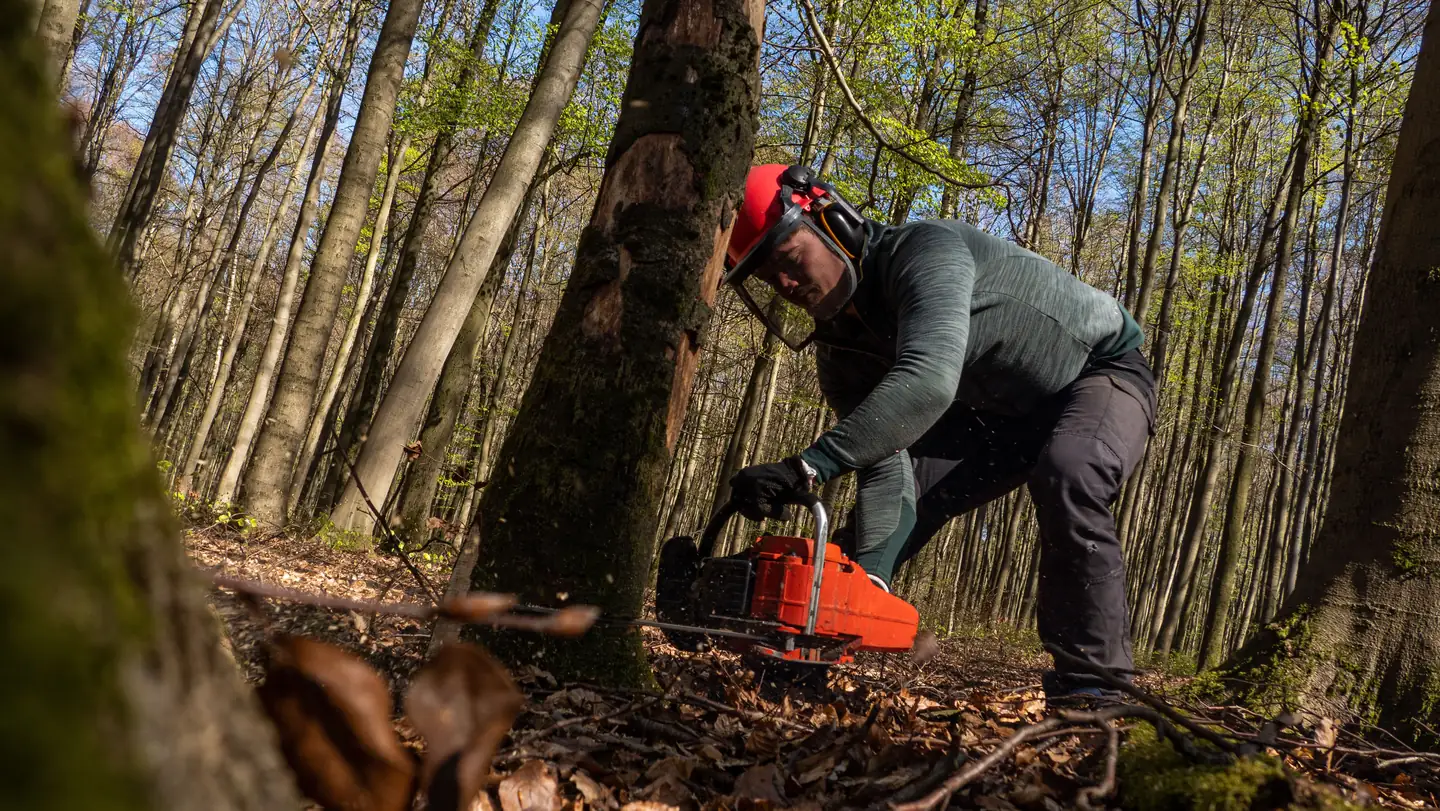
Safe cutting basics
- Read the owner's manual and check the chain brake, chain tension, and sharpness before starting.
- Start the saw on the ground, never by drop-starting it.
- Hold it with both hands and keep a firm footing. Never cut above shoulder height or from a ladder.
- Watch for kickback: avoid cutting with the upper tip of the bar, where kickback happens.
- Read the tension. Bent limbs ("spring poles") can whip back with great force when cut. Make small relief cuts on the compressed side first, and stand out of the path.
- Plan an escape route and know which way the wood will fall or roll.
- Never work alone, and keep bystanders and kids at least two tree lengths away.
- Refuel only with the engine off and cooled down. Take breaks; fatigue causes accidents.
Carbon monoxide
Gas-powered chainsaws give off carbon monoxide. Never run them in a garage, basement, or other enclosed space. See carbon monoxide safety.

Before you cut: document
Take photos of downed trees and any damage they caused before cutting. Insurance may help pay for tree removal in some cases, and FEMA may help with debris that blocks access to your home after a declared disaster. Keep all receipts. See storm cleanup.
Frequently asked questions
What protective gear do I need to run a chainsaw?
A hard hat, eye and hearing protection, heavy gloves, chainsaw chaps or cut-resistant pants, and sturdy boots.
What causes chainsaw kickback?
Kickback happens when the upper tip of the guide bar touches wood or another object, throwing the saw back toward you. Avoid cutting with the tip.
Should I cut a tree that is touching a power line?
No. Stay at least 10 feet away and call your utility. Assume every downed line is live.
Need help with your claim or paperwork?
NFCcop offers free guidance to storm survivors. Ask for free help or browse all disaster recovery resources.