Tornado Safety: Where to Go and What to Do
Last reviewed November 7, 2026. Free public guidance from The New Faith Church and Co-op, Inc. (NFCcop), a 501(c)(3) nonprofit. This is general information, not legal or professional advice. Rules and deadlines can change, so confirm with the official sources below.
Tornadoes can form fast and strike with only minutes of warning. Knowing ahead of time where you will shelter, in your home, at work, or on the road, is what saves lives. This guide covers the basics from the National Weather Service and FEMA in plain language.
Tornado watch vs. tornado warning
- Tornado watch: conditions are right for tornadoes. Review your plan, charge your phone, and know where you will go.
- Tornado warning: a tornado has been seen or shows up on radar. Go to shelter now. Don't wait to see it.
Have more than one way to get warnings: a weather radio, phone emergency alerts, and local TV or radio. Outdoor sirens are meant for people outside and may not be heard indoors.
Where to take shelter
- House or building: go to a basement or storm shelter. If you don't have one, go to a small interior room on the lowest floor, like a closet, bathroom, or hallway, away from windows. Get under something sturdy and cover your head and neck with your arms, a mattress, or blankets. Helmets help.
- Mobile or manufactured home: leave. Mobile homes are not safe in a tornado, even with tie-downs. Go to a sturdy building or community shelter you picked ahead of time. See mobile home storm safety.
- In a car: if you can't get to a building, stay buckled, keep your head below the windows, and cover your head. Never shelter under a highway overpass.
- Outside with no shelter: lie flat in a low area away from trees and cars and protect your head. Watch for flying debris and flooding.
After the tornado
- Stay put until the warning expires. More storms can follow.
- Watch for downed power lines, broken glass, nails, and gas leaks. If you smell gas, leave and call from outside. See what to do if you smell gas.
- Don't go into damaged buildings until they are inspected.
- Wear sturdy shoes, long pants, and work gloves during cleanup.
- Take photos and video of all damage before moving anything. See how to document storm damage.
Getting help
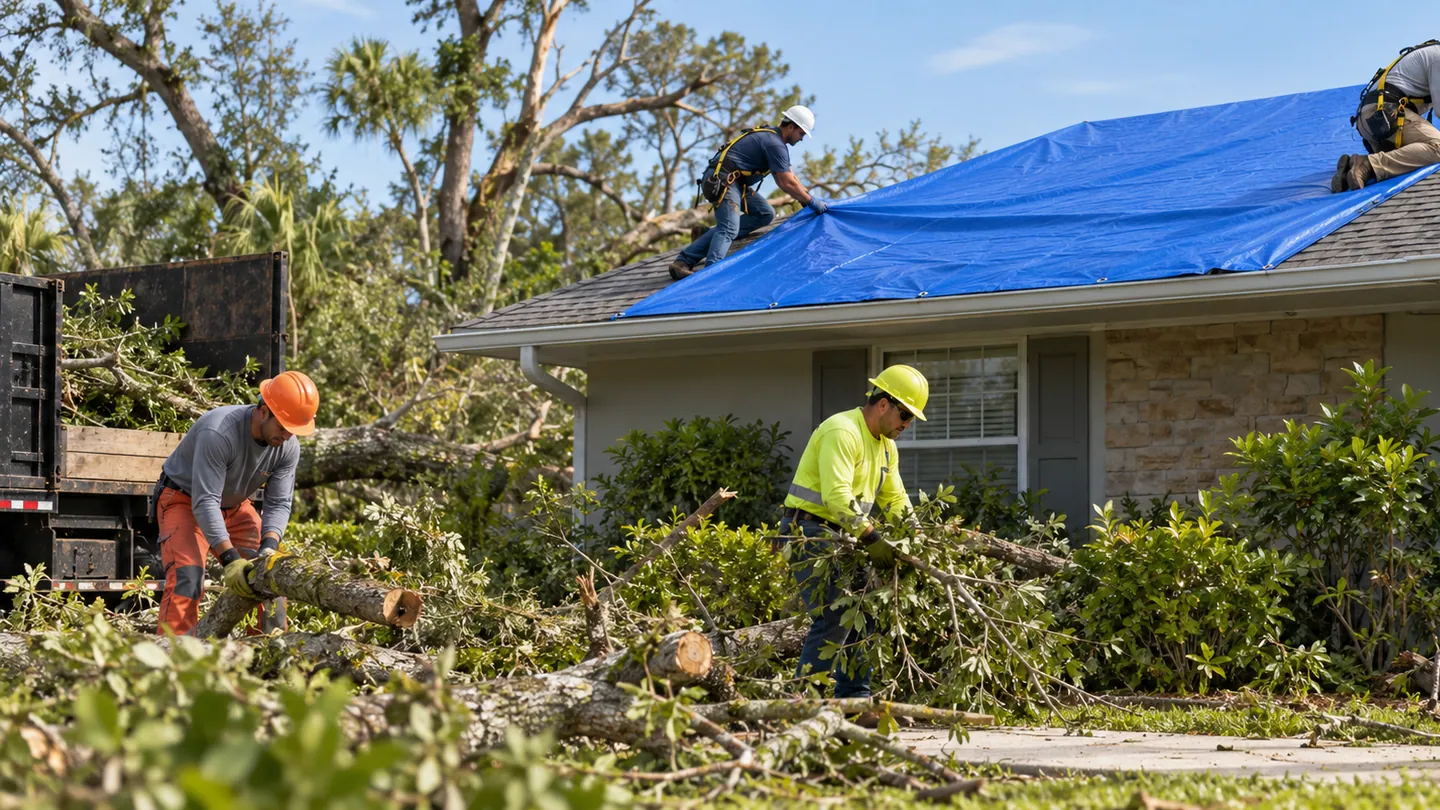
Cover broken windows and roof openings to prevent more damage and keep your receipts. See the roof tarp guide. If your area gets a federal disaster declaration, you may be able to apply for FEMA assistance.
Frequently asked questions
Where is the safest place in a house during a tornado?
A basement or storm shelter. Without one, go to a small interior room on the lowest floor, away from windows, and cover your head and neck.
Is it safe to stay in a mobile home during a tornado?
No. Mobile and manufactured homes can be destroyed even when tied down. Go to a sturdy building or community shelter before the storm.
What's the difference between a tornado watch and a warning?
A watch means conditions are right for tornadoes. A warning means a tornado has been seen or detected on radar, so take shelter immediately.
Need help with your claim or paperwork?
NFCcop offers free guidance to storm survivors. Ask for free help or browse all disaster recovery resources.