Emergency Planning for People With Disabilities
Last reviewed November 9, 2026. Free public guidance from The New Faith Church and Co-op, Inc. (NFCcop), a 501(c)(3) nonprofit. This is general information, not legal or professional advice. Rules and deadlines can change, so confirm with the official sources below.
People with disabilities have the right to equal access to emergency services, shelters, and disaster aid. A good plan puts you in control: it lists what you need, who will help, and how you'll get it if power, transit, and phones go down.
Build a support network
Pick at least three people, such as family, neighbors, coworkers, or caregivers, who will check on you in an emergency. Give them a key if you're comfortable doing so, show them how to use your equipment, and agree on how you'll reach each other. See our family reunification plan.
Write down what you need
- Medical conditions, medicines and doses, allergies, and doctors' contact information
- Equipment you use (make, model, serial number) and how to operate it
- Communication needs, such as an interpreter, text, or picture boards
- Insurance cards and a copy of any disability documentation
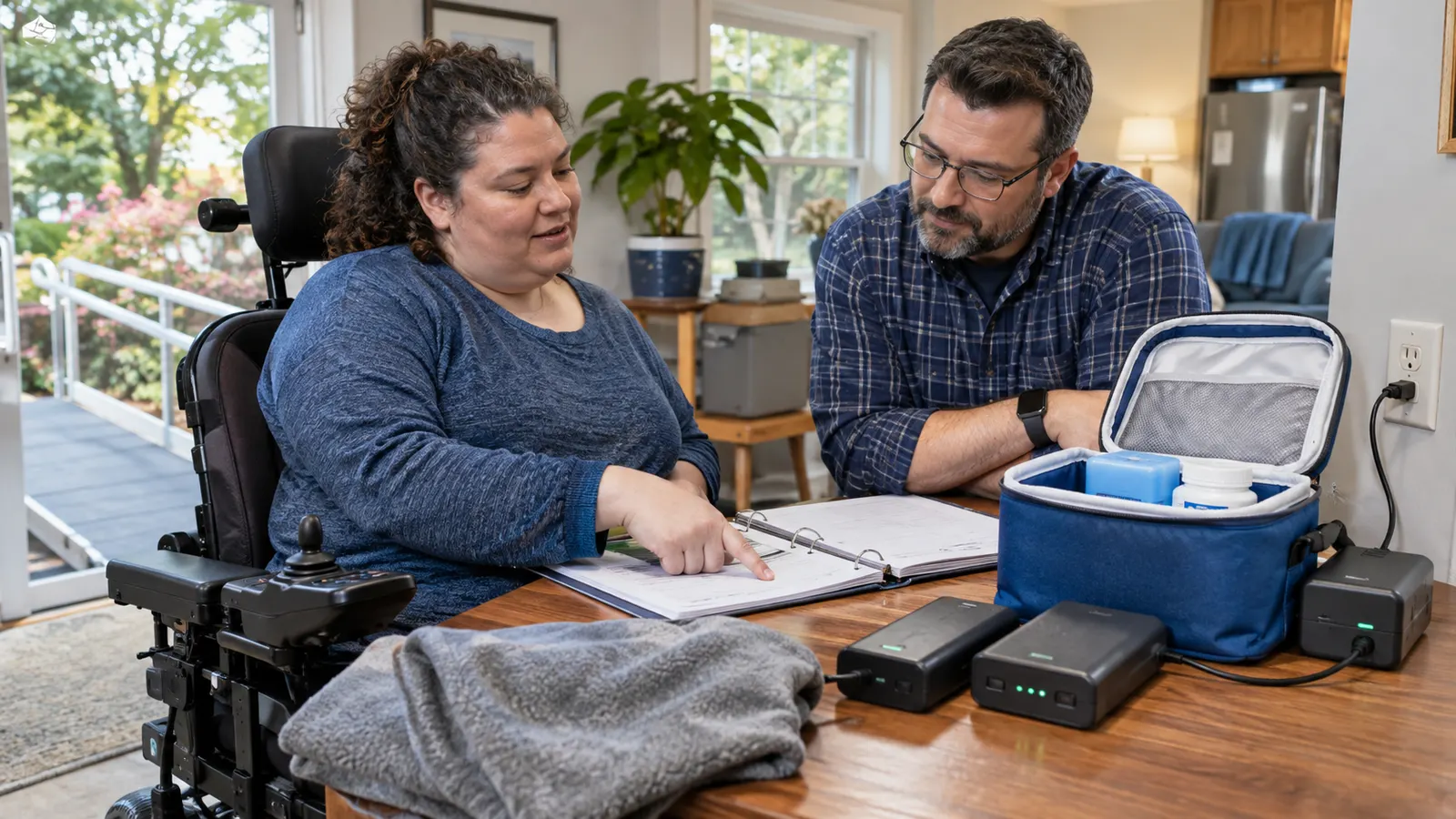
Plan for power
If you rely on a powered wheelchair, oxygen, a ventilator, CPAP, or refrigerated medicine, have backup batteries, know how long they last, and register with your utility's medical program. See medical equipment during an outage.
Evacuation and shelters
- Register with your county's special needs or transportation registry if you'll need help leaving. See evacuating without a car.
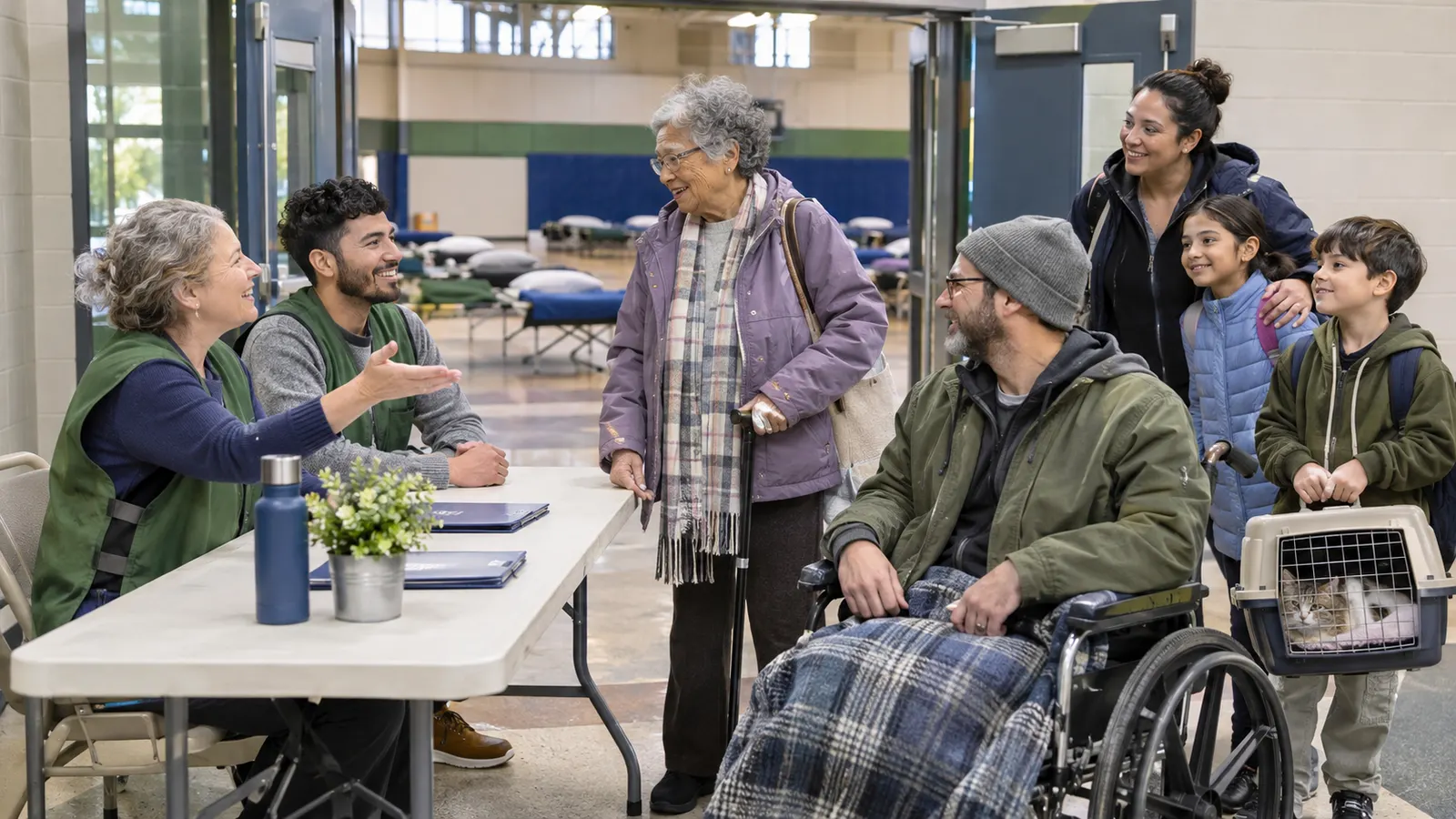
- Under the Americans with Disabilities Act, public emergency shelters must be accessible and must allow service animals. You can't be turned away from a general shelter just because of a disability.
- Bring your equipment, chargers, medicines, and your written list. See finding a shelter.
Alerts you can use
If you're deaf or hard of hearing, set phone emergency alerts to vibrate and flash, and look for weather radios with strobe lights or bed shakers. If you're blind or have low vision, choose a talking weather radio. See emergency alerts.
After a disaster
You can ask FEMA for reasonable accommodations, such as an interpreter, accessible documents, or extra time. See FEMA accessibility and accommodations. If you lost medicines or medical equipment, see replacing medication after a disaster.
Frequently asked questions
Can an emergency shelter turn me away because of my disability?
Public shelters must follow the Americans with Disabilities Act, which requires equal access and allows service animals. Ask for the accommodations you need.
What should be in an emergency plan for a person with a disability?
A support network, a written list of medical needs and equipment, backup power, evacuation and transportation plans, and accessible ways to get alerts.
How do I get help evacuating if I have a disability?
Register with your county's special needs or transportation registry before a disaster and tell them what equipment you use.
Need help with your claim or paperwork?
NFCcop offers free guidance to storm survivors. Ask for free help or browse all disaster recovery resources.